
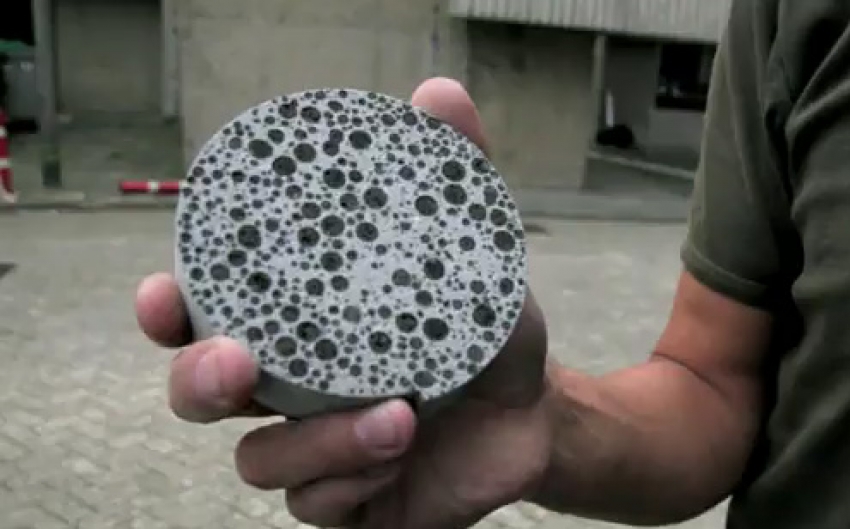
Civil engineering researchers at the Massachusetts Institute of Technology have developed a new formulation of self-healing concrete that uses dormant spore-forming bacteria embedded within the material to autonomously repair hairline cracks as they form, potentially extending the structural lifespan of buildings, bridges, and roads by decades while substantially reducing the carbon footprint associated with maintenance concrete production and repair operations. The research, published this week in the journal Nature Materials, represents a significant advance over earlier bioconcrete prototypes that struggled to maintain bacterial viability over long periods within the harsh alkaline environment of cured cement.
The MIT team solved the viability problem by encapsulating the bacterial spores — a strain of Bacillus subtilis engineered for enhanced alkaline tolerance — within silica gel microspheres that protect the organisms during the curing process and dissolve when moisture enters through a forming crack, exposing the spores to the water and oxygen they need to activate. Once activated, the bacteria metabolize calcium lactate that is co-embedded in the concrete matrix, producing calcite crystals that fill the crack and restore structural integrity within approximately three weeks under standard atmospheric conditions.
Laboratory testing showed the self-healing process capable of sealing cracks up to 0.8 millimeters in width — wider than the threshold at which cracks typically begin to compromise structural performance and accelerate corrosion of internal reinforcing steel. Specimens that had been cracked and allowed to self-heal showed compressive strength recovery averaging ninety-two percent of the original value, a result that surprised even the research team given the complexity of the biological mechanisms involved.
Construction industry partners who reviewed the research estimated that self-healing concrete could reduce lifetime maintenance costs for infrastructure by between twenty-five and forty percent, with the largest savings accruing in environments with wide temperature cycling and high moisture exposure — precisely the conditions that accelerate conventional concrete deterioration.
The team is now working with two major construction material manufacturers on scaled production trials, with initial commercial availability targeted for 2028 pending further durability testing in real-world infrastructure applications.

Leave a Reply