
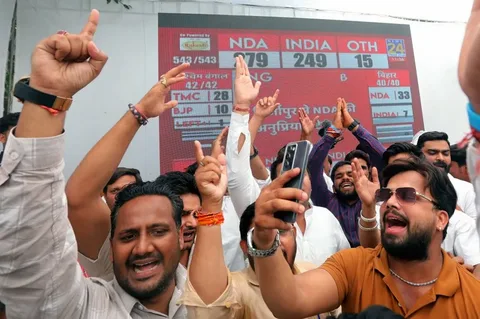
India’s ruling National Democratic Alliance coalition was plunged into its most severe political crisis since the 2024 general election after the Janata Dal (United) party, which holds twenty-eight seats in the Lok Sabha, announced Saturday that it was withdrawing its legislative support over a dispute concerning federal allocation of infrastructure funds to Bihar state. The withdrawal leaves the coalition mathematically short of a simple majority on paper, triggering demands from opposition parties for an immediate confidence vote on the floor of the lower house of parliament.
The rupture follows months of increasingly strained relations between the BJP-led national leadership and its Bihar coalition partner over what the regional party’s president described in a press conference as a systematic pattern of underfunding state-level development priorities while favoring constituencies in states where the BJP holds direct government control. The specific trigger was the central government’s revised infrastructure budget, which critics said allocated disproportionately fewer highway and railway project funds to Bihar relative to the state’s population share and existing project pipeline.
Government spokespersons rejected the characterization, pointing to what they called a strong investment record in Bihar and suggesting the withdrawal was motivated by internal political calculations ahead of state assembly elections scheduled for later in the year. Parliamentary floor managers began immediate outreach to unaffiliated independent members and smaller regional parties to explore whether sufficient support exists to survive a confidence vote without the JD(U) bloc.
Constitutional experts noted that under established parliamentary conventions, the Speaker of the Lok Sabha is obligated to schedule a confidence vote within a reasonable timeframe once a formal motion is tabled, which opposition leaders said they would do within days. Governments have survived similar crises in Indian political history through rapid floor management and negotiated accommodations, but analysts cautioned this situation carries unusual structural complexity.
Financial markets in Mumbai reacted nervously, with the Sensex falling 1.7 percent in early Monday trading before partially recovering as investors assessed the likelihood of the government finding a path to stability.
Leave a Reply