
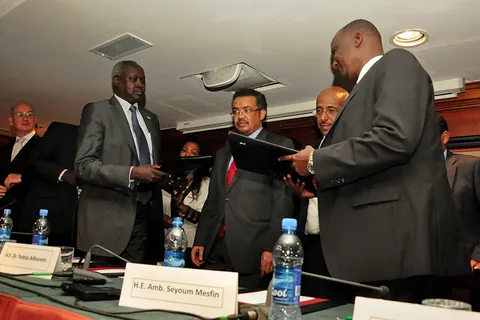
Delegations representing Sudan’s Armed Forces and the Rapid Support Forces signed a comprehensive ceasefire agreement in Nairobi on Sunday evening, ending eighteen months of devastating civil conflict that has produced one of the world’s largest displacement crises and left large portions of Khartoum and Darfur in ruins. The agreement, mediated by the African Union with technical support from the United Nations and the governments of Egypt, Saudi Arabia, and the United States, establishes an immediate halt to hostilities, a monitored withdrawal framework, and a transitional governance roadmap leading toward civilian-led elections within thirty months.
The signing ceremony, held at the African Union’s regional liaison office, was attended by the heads of state of seven African nations who had provided diplomatic support throughout the mediation process. Both faction leaders signed in person — a detail that negotiators described as symbolically important after previous rounds of talks collapsed at the final stage when principals refused to appear at the same table.
Humanitarian organizations operating in the country cautiously welcomed the announcement while stressing that a ceasefire signature does not automatically translate into safe access for aid delivery. The UN Office for the Coordination of Humanitarian Affairs estimated that more than nine million people remain internally displaced, with acute malnutrition rates in Darfur and South Kordofan reaching emergency threshold levels. Aid corridors through Port Sudan and the Chadian border crossings will require explicit security guarantees before relief operations can resume at the scale the situation demands.
The agreement includes provisions for a joint ceasefire monitoring commission composed of representatives from both armed groups alongside neutral African Union observers equipped with satellite communications and authority to escalate violations to the Security Council. Previous monitoring mechanisms in Sudan have failed due to inadequate resourcing, and international donors at the signing pledged an initial forty million dollar contribution to fund the commission’s first year of operations.
International diplomats warned that numerous spoiler factions with interests in continued instability remain outside the agreement’s framework, and that sustained political engagement from regional powers will be essential to prevent a return to fighting in the months ahead.

Leave a Reply