
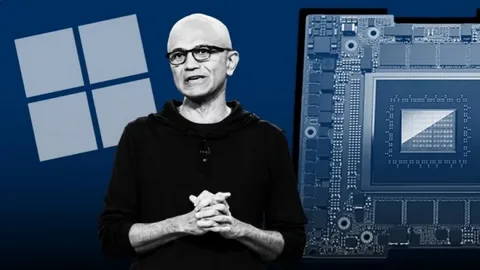
Microsoft announced the acquisition of Helsinki-based AI chip designer Recognizing in a deal valued at approximately four point two billion dollars, marking the American technology giant’s most significant semiconductor investment to date and accelerating its strategy to reduce dependence on third-party chip suppliers for running artificial intelligence workloads across its Azure cloud infrastructure. The Finnish company, founded in 2019, has developed a proprietary neural processing architecture that independent benchmarks show outperforming leading competitors on specific transformer model inference tasks by margins of twenty-five to forty percent at equivalent power consumption levels.
The acquisition deepens a trend among hyperscale cloud providers to design custom silicon tailored to the precise computational demands of their own AI software stacks rather than relying on general-purpose graphics processing units originally designed for gaming and later adapted for machine learning. Google, Amazon, and Meta have each pursued analogous internal silicon programs with varying degrees of commercial deployment, and Microsoft’s move signals it intends to compete aggressively in a domain where chip design increasingly determines competitive differentiation in cloud AI services.
Recognizing’s approximately three hundred engineers will join Microsoft’s Azure Hardware Systems and Infrastructure division and continue operating from Helsinki, which Microsoft described as a strategic talent retention decision given the strength of Finland’s engineering talent pipeline from institutions including Aalto University. The company’s founding CEO will assume a vice president role leading custom silicon development across Microsoft’s data center hardware organization.
The deal is subject to regulatory review in both the European Union and the United States. Antitrust observers noted that semiconductor acquisitions have faced increasing scrutiny globally following several high-profile blocked deals in recent years, though most analysts assessed that Recognizing’s market position as a small but technically advanced design house is unlikely to raise the concentration concerns that derailed larger transactions.
Shares of Nvidia fell modestly on the news as investors weighed the longer-term implications of major cloud customers investing in silicon alternatives, though analysts noted that cloud demand for Nvidia’s products remains robust for the foreseeable future given the pace of AI infrastructure expansion.
Leave a Reply